
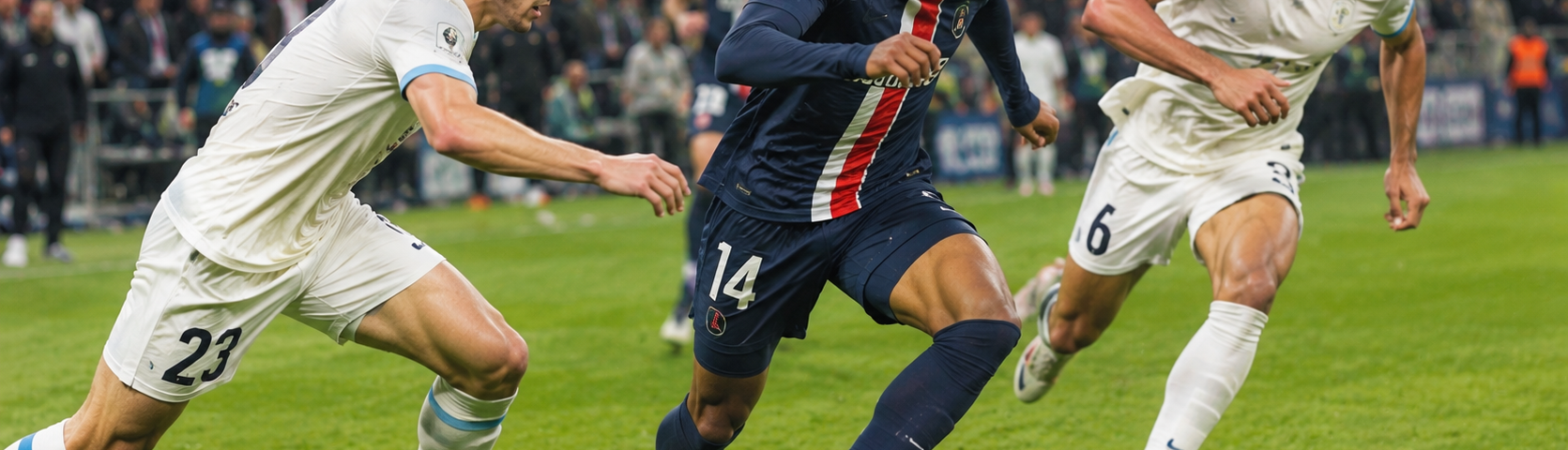
French football has a character that becomes more interesting the longer you follow it. Its matches combine technical creativity, physical intensity, tactical variety and the unpredictability of a competition where established names regularly face ambitious challengers. A spectacular goal may become the defining image of an evening, but the story behind it often involves much more: a young player’s breakthrough, a coach’s tactical adjustment or a team finding the confidence to challenge an opponent with greater experience. Exploring Ligue 1 match replays offers an opportunity to revisit these moments and understand the wider stories developing across French football.
Ligue 1 has become an important stage for both established international players and emerging talents. Its clubs have different identities, resources and ambitions, creating a competition that rarely feels uniform. Some teams prefer to dominate possession, others rely on rapid transitions, while several have built their reputations around energetic pressing and direct attacking football.
Watching a complete match provides a deeper perspective than a short collection of highlights. It reveals how teams organise themselves, how individual players respond to pressure and why certain moments become turning points. It also makes it possible to appreciate the development of players who may become the leading figures of French and international football in the years ahead.
A Football Landscape Full of Different Ambitions
One of the defining features of Ligue 1 is the variety of clubs competing within it. Paris Saint-Germain attracts considerable international attention, but the wider competition includes institutions with long histories, ambitious projects and strong regional connections.
Marseille is known for its passionate support and intense football culture. Lyon has a reputation for developing talented players and maintaining an important place in French football. Monaco has repeatedly demonstrated its ability to build competitive teams, while Lille, Rennes, Nice and Lens have all contributed memorable performances and distinctive sporting identities.
These differences create an interesting competitive environment. A club pursuing European qualification may approach a match with a different level of urgency from a side trying to establish itself in the top division. A team with several experienced international players might rely on individual quality, while another uses collective organisation and youthful energy to compensate for a smaller squad.
A full match helps explain how these ambitions influence performances. Viewers can observe how a team approaches an opponent with different strengths, whether it attempts to control possession or prefers to exploit open spaces, and how its strategy changes when the result is not developing as expected.
The league becomes more rewarding when followed beyond its most internationally recognised fixtures. Each club contributes another perspective on the character of French football.
France’s Reputation as a Source of Exceptional Talent
French football has long been associated with the development of technically gifted and physically versatile players. Its youth development environment has helped produce footballers capable of adapting to different positions, tactical systems and levels of competition.
The country has a particularly strong tradition of developing players with diverse footballing backgrounds. Academies and training centres bring together young athletes with different experiences, creating environments where technical education, tactical awareness and physical preparation develop together.
Ligue 1 plays an important role in the transition from youth football to the professional game. Young players are given opportunities to compete against experienced opponents, learn how to manage difficult situations and gradually establish themselves at senior level.
Watching a complete match can reveal more about this process than a highlight package. A promising midfielder may not score or assist, but their movement and decision-making can demonstrate growing confidence. A young defender might make one mistake yet recover with several disciplined interventions. A forward may show how quickly they learn to adapt when opponents begin defending more aggressively.
These details are important because player development rarely follows a straight line. Progress involves successful performances, difficult evenings and gradual improvements in consistency. The complete match preserves the context in which these changes take place.
Paris Saint-Germain and the Pressure of Expectations
Paris Saint-Germain has become one of the most prominent institutions in modern French football. Its domestic ambitions, international profile and history of attracting high-level players have made the club a central figure in discussions about Ligue 1.
The attention surrounding PSG creates a particular environment for its opponents. Facing a team with such expectations can be a major challenge, but it also provides an opportunity for other clubs to test their organisation and ambition against a recognised benchmark.
These encounters are interesting because they can reveal different approaches to handling pressure. Some opponents attempt to press high and disrupt PSG’s build-up. Others prefer to defend compactly, reduce the space available in central areas and look for opportunities to counterattack.
The way PSG responds can be just as revealing. A team expected to dominate may need patience when its opponent refuses to open spaces. Individual quality remains important, but collective movement and decision-making are often essential to breaking down a disciplined defence.
A full match provides a clearer picture of these tactical exchanges. It allows viewers to follow the contest beyond the most spectacular attacks and understand why a particular strategy succeeds or fails.
Regional Rivalries and the Emotional Side of French Football
French football is closely connected with regional identities. Clubs represent cities and communities with their own histories, traditions and relationships with the game. This connection becomes especially visible during major rivalries.
The encounter between Marseille and Paris Saint-Germain, commonly known as Le Classique, is one of the most recognisable fixtures in French football. It brings together two clubs with contrasting identities and a rivalry that attracts attention far beyond their immediate supporter communities.
Other regional contests are equally important to the competition’s character. Matches involving Lyon and Saint-Étienne have traditionally carried a strong local dimension. The rivalry between Lille and Lens reflects the football culture of neighbouring communities in northern France, where club loyalty is closely connected with regional pride.
These encounters are about more than points. Supporters bring memories of previous meetings into the stadium, while players understand that their performance may become part of a much longer story.
A complete match preserves the atmosphere surrounding these occasions. The viewer can experience the changing reactions of the crowd, the intensity of individual challenges and the emotional response to important decisions. A highlights package may show the goals, but the full contest communicates why the fixture matters.
The Tactical Variety of Ligue 1
French football does not have one defining tactical formula. Coaches use different systems depending on the qualities of their squads and the challenges presented by their opponents.
Some teams prefer to build attacks through short passing combinations. Others use direct forward movement, looking to exploit the speed of their attackers. High pressing is common among sides that want to recover possession quickly, while teams facing stronger opponents may concentrate on defensive organisation and carefully selected counterattacks.
The balance between physical intensity and technical creativity is particularly interesting. Ligue 1 contains players capable of winning individual duels, but successful teams also need to understand when to retain possession, change the tempo or move the ball into open areas.
Watching a complete match makes these decisions easier to recognise. A midfielder may repeatedly position themselves between the opposition’s lines, while a full-back moves forward to create an additional attacking option. A defensive adjustment may force the opponent to change its approach, gradually transforming the shape of the contest.
Substitutions add another layer. A coach may introduce a quicker forward to challenge a tired defence or add another midfielder to regain control of the central areas. These changes can have an immediate effect, but their significance is easier to understand when viewed in the context of the entire match.
Why Smaller Clubs Often Produce Fascinating Performances
The appeal of Ligue 1 is not limited to the clubs competing for major honours. Teams with more modest resources can produce some of the competition’s most interesting performances through organisation, commitment and effective use of available players.
A well-prepared underdog can make life difficult for a technically stronger opponent. It may defend in a compact shape, close central passing routes and wait for an opportunity to attack quickly. In other matches, an ambitious team may choose to press aggressively, attempting to create uncertainty before the opposition has time to establish control.
These approaches demonstrate that football is not determined by reputation alone. Preparation, communication and the ability to execute a strategy under pressure can influence the result significantly.
Complete match recordings are particularly useful for appreciating these performances. A narrow defeat may conceal a disciplined display in which the underdog remained competitive for most of the evening. A surprising victory may reveal how effectively the winning side exploited specific weaknesses.
For supporters interested in the broader competition, these matches offer a chance to discover clubs and players who receive less international attention but contribute greatly to the league’s sporting identity.
From Short Highlights to the Complete Match Experience
Modern football audiences often rely on short video summaries to follow competitions. Highlights provide a convenient overview of goals, saves and controversial incidents, particularly when watching a full fixture is not possible.
However, this format leaves out much of the original contest. It may show a goal without explaining how the attacking team created the opportunity, or present a goalkeeper’s save without including the pressure that preceded it.
Extended highlights offer more context, but they still select particular passages. A complete match preserves the sequence of events from the opening whistle to the final moments.
This distinction matters when trying to understand the development of a game. A team may spend a long period building pressure before finding an opening. Another may survive several difficult moments and then score through a rapid counterattack. The final result does not always reveal how dramatically the balance changed.
Full-match viewing also allows supporters to concentrate on specific aspects of the game. Some may follow the movement of a particular player, while others are interested in defensive organisation, substitutions or the way a team reacts after conceding.
The experience becomes less dependent on the selection of memorable incidents and more connected to the viewer’s own interests.
How Ligue 1 Continues to Evolve
French football is constantly changing. Clubs adapt their recruitment strategies, coaches introduce new ideas and young players arrive with different technical and physical qualities. The competition must balance its established traditions with the demands of an increasingly international sporting environment.
The development of young talent remains an important part of its identity, but the modern game also places greater emphasis on tactical flexibility and physical preparation. Players are expected to operate in several positions, make decisions quickly and contribute to both attacking and defensive phases.
The growing importance of women’s football also adds another dimension to the wider French football landscape. The development of the women’s domestic game, increased visibility and the emergence of new sporting personalities demonstrate how the country’s football culture continues to expand.
For supporters, these changes make the competition interesting beyond the immediate result of each fixture. Following matches across different seasons can reveal how clubs develop, how playing styles change and which young players begin to influence the league.
Every Match Reveals Another Side of French Football
Ligue 1 brings together a wide range of footballing identities. Its leading clubs attract international attention, but its broader appeal comes from the combination of regional traditions, emerging talent, tactical variety and unpredictable encounters.
A complete match preserves the details that make each fixture different. It reveals the work behind an attacking move, the organisation required to protect a lead and the emotional atmosphere that surrounds important moments. It also allows viewers to appreciate performances that might otherwise disappear behind a short highlights package.
French football is constantly producing new stories. Some involve established clubs defending their ambitions, others follow young players taking their first steps towards international recognition. Many emerge from matches that initially appear ordinary but later become important parts of a season.
The final score may summarise the outcome, but the complete contest explains how it happened. Returning to Ligue 1 matches offers a way to rediscover that story and appreciate the talent, character and passion that continue to shape French football.